
Events
Immunology Seminar Series
October 6th 2026 at 14-15 (Finland time)
Virtual event
Laura Airas, Turku PET Centre, Clinical Neurosciences and InFLAMES Research Flagship, University of Turku; Neurocenter, Turku University Hospital:
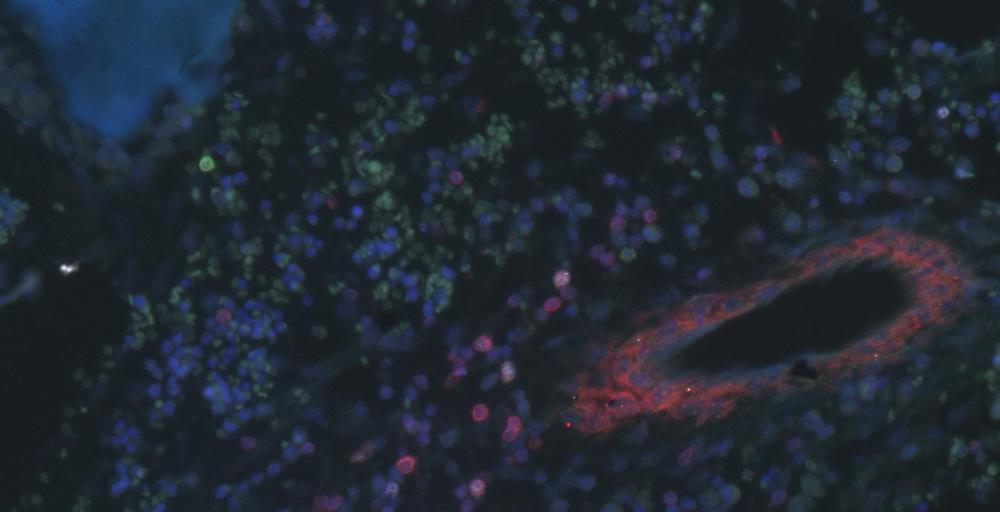
Microglia: pathology and imaging
Link to seminar: https://utu.zoom.us/j/65192337552
Register for the Immunology Seminar Series email list to get calendar invitation to the online seminar: https://link.webropolsurveys.com/S/D29C32AA6E8A2F7A
Host: Professor Riitta Lahesmaa
Immunology seminar series is jointly organised by the Finnish Society for Immunology, InFLAMES Flagship and Turku Bioscience. For further information contact Anne Lahdenperä ( ankahy(ät)utu.fi ) or Riitta Lahesmaa ( rilahes(ät)utu.fi ), University of Turku.
Professor Laura Airas obtained her medical degree at the University of Turku, Finland. She then completed a PhD in immunology and cell biology and specialized in neurology and presently conducts research at Turku PET Centre with the aim to elucidate features of CNS inflammation contributing to MS disease progression. Her research group uses a combination of advanced imaging, clinical phenotyping and soluble biomarker analysis to better understand the pathology leading to MS disability, with an overall aim to develop new efficient treatments for this undertreated condition. Funding for her group comes from the Research Council of Finland, the US National MS Society, the US Department of Defence, Jane and Erkko foundation and industry. Additionally, she is currently leading two Progressive MS Alliance-funded clinical trials targeting smouldering inflammation. In 2015 Laura Airas received an international Grant for Multiple Sclerosis Innovation (GMSI) award, and in 2016-2017 she spent the academic year as a visiting professor at Yale University.
Selected publications:
Hartiala O, Tuomaala J, Airas L. PET imaging of microglial pathology in multiple sclerosis. Curr Opin Neurol. 2026 Jun 1;39(3):240-246. doi: 10.1097/WCO.0000000000001490. Epub 2026 Apr 17.
Nylund M, Lehto J, Matilainen M, Rajander J, Wahlroos S, Sucksdorff M, Kuhlmann T, Airas L. Longitudinal accumulation of glial activation measured by TSPO-PET predicts later brain atrophy in multiple sclerosis. J Neuroinflammation. 2025 Aug 7;22(1):200. doi: 10.1186/s12974-025-03519-y.
Klotz L, Smolders J, Lehto J, Matilainen M, Lütje L, Buchholz L, Albrecht S, Walter C, Varghese J, Wiendl H, Nylund M, Thomas C, Gardberg M, van den Bosch AMR, Airas L, Huitinga I, Kuhlmann T. Broad rim lesions are a new pathological and imaging biomarker for rapid disease progression in multiple sclerosis. Nat Med. 2025 Jun;31(6):2016-2026. doi: 10.1038/s41591-025-03625-7. Epub 2025 Apr 29.
Immunology Seminar Series 2026
September 1st at 14-15 (Finland time)
Virtual event
Heidi Haikala, Institute for Molecular Medicine Finland (FIMM) & HiLIFE,
Translational Immunology Research Program (TRIMM), University of
Helsinki and Tampere University: It’s About TIME : Mechanisms and
Biomarkers for Lung Cancer Immunotherapy Resistance
Link to join the seminar: https://utu.zoom.us/j/65205438709 [1]
Host: Professor Riitta Lahesmaa ( rilahes(at)utu.fi )
Immunology seminar series is jointly organised by the Finnish Society
for Immunology, InFLAMES Flagship and Turku Bioscience. For further
information contact Anne Lahdenperä ( ankahy(at)utu.fi ) or Riitta
Lahesmaa ( rilahes(at)utu.fi ), University of Turku.
Register for the Immunology Seminar Series email list to get calendar
invitation to the online seminar:
https://link.webropolsurveys.com/S/D29C32AA6E8A2F7A [2]
Dr. Heidi Haikala (PhD, MBA) is an Assistant Professor at the University
of Helsinki and a translational cancer biologist specializing in
immuno-oncology, with a focus on tumor–immune interactions, therapy
resistance mechanisms, and the development of human-relevant
experimental systems to guide precision cancer treatment. She is also
Vice Director of the Centre for Cancer Eradication Research at Tampere
University. Her research integrates advanced ex vivo modeling,
single-cell and spatial omics, and functional immunology to model
therapeutic responses directly in patient-derived samples and identify
actionable therapeutic vulnerabilities.
She completed her postdoctoral training at Dana-Farber Cancer Institute
and Harvard Medical School, where she studied targeted therapy
resistance in lung cancer. Her work contributed to the initiation of a
clinical trial (NCT04676477) based on mechanistic studies of
HER3-targeted therapy in EGFR-mutated lung cancer. She currently leads
the HaikalaLab Immuno-Oncology Group at the University of Helsinki and
Tampere University and is also affiliated with Helsinki University
Hospital.
A central component of her research is the development of clinically
actionable immuno-oncology modeling platforms using fully human
patient-derived systems. This work has generated patent protection and
led to the founding of Solid IO, a biotechnology spinout originating
from her academic laboratory that develops human-relevant
immuno-oncology models for drug development and precision oncology.
Selected publications:
1. Alsaed B, Lin L, Son J,.. Haikala HM. Intratumor heterogeneity of
EGFR expression mediates targeted therapy resistance and formation of
drug tolerant microenvironment. Nature Communications. 2025;16(1):28.
2. Alsaed B, Smolander J, Laitinen H,.. Haikala HM. Ex vivo modeling of
precision immuno-oncology responses in lung cancer.Science Advances.
2024;10(44).
3. Kremneva E, Smolander J, Peltokangas M,,.. Haikala HM. Precision
tumor-on-chip for personalized assessment of drug efficacy and immune
cell delivery. Cell Reports Methods. 2026;101475.
Links:
------
[1] https://utu.zoom.us/j/65205438709
[2] https://link.webropolsurveys.com/S/D29C32AA6E8A2F7A
Immunology Seminar Series February 3rd at 14-15 (Finland time)
Virtual event
Taija Mäkinen, University of Helsinki: Lymphatic vasculature as a
guardian of tissue homeostasis and inflammation
Zoom link available from organizers
Register for the Immunology Seminar Series email list to get calendar
invitations to the online seminars:
https://link.webropolsurveys.com/S/D29C32AA6E8A2F7A [3]
Host: Professor Riitta Lahesmaa ( rilahes[at]utu.fi )
Immunology seminar series is jointly organised by the Finnish Society
for Immunology, InFLAMES Flagship and Turku Bioscience. For further
information contact Anne Lahdenperä ( ankahy[at]utu.fi ) or Riitta
Lahesmaa ( rilahes[at]utu.fi ), University of Turku.
Taija Mäkinen obtained her PhD from the University of Helsinki and
completed postdoctoral training at the Max Planck Institute of
Neurobiology in Martinsried, Germany. She previously served as a group
leader at the Cancer Research UK London Research Institute (now the
Francis Crick Institute) and later as Professor at Uppsala University.
In 2024, she returned to Finland and currently serves as Director of the
Wihuri Research Institute and Professor at the Faculty of Medicine,
University of Helsinki. Her research focuses on the mechanisms
regulating the lymphatic vascular system and its roles in health and
disease.
Recent selected publications:
Kraft M, Schoofs H, Petkova M, Andrade J, Grosso AR, Benedito R, De Roo
AK, Boon LM, Vikkula M, Kapp FG, Hägerling R, Potente M, Mäkinen T.
Angiopoietin-TIE2 feedforward circuit promotes PIK3CA-driven venous
malformations. Nat Cardiovasc Res. 2025 Jul;4(7):801-820. doi:
10.1038/s44161-025-00655-9.
Schoofs H, Daubel N, Schnabellehner S, Grönloh MLB, Palacios Martínez
S, Halme A, Marks AM, Jeansson M, Barcos S, Brakebusch C, Benedito R,
Engelhardt B, Vestweber D, Gaengel K, Linsenmeier F, Schürmann S,
Saharinen P, van Buul JD, Friedrich O, Smith RS, Majda M, Mäkinen T.
Dynamic cytoskeletal regulation of cell shape supports resilience of
lymphatic endothelium. Nature. 2025 May;641(8062):465-475. doi:
10.1038/s41586-025-08724-6.
Petkova M, Kraft M, Stritt S, Martinez-Corral I, Ortsäter H,
Vanlandewijck M, Jakic B, Baselga E, Castillo SD, Graupera M, Betsholtz
C, Mäkinen T. Immune-interacting lymphatic endothelial subtype at
capillary terminals drives lymphatic malformation. J Exp Med. 2023 Apr
3;220(4):e20220741. doi: 10.1084/jem.20220741.
Hernández Vásquez MN, Ulvmar MH, González-Loyola A, Kritikos I, Sun
Y, He L, Halin C, Petrova TV, Mäkinen T. Transcription factor FOXP2 is
a flow-induced regulator of collecting lymphatic vessels. EMBO J. 2021
Jun 15;40(12):e107192. doi: 10.15252/embj.2020107192.
Martinez-Corral I, Zhang Y, Petkova M, Ortsäter H, Sjöberg S, Castillo
SD, Brouillard P, Libbrecht L, Saur D, Graupera M, Alitalo K, Boon L,
Vikkula M, Mäkinen T. Blockade of VEGF-C signaling inhibits lymphatic
malformations driven by oncogenic PIK3CA mutation. Nat Commun. 2020 Jun
8;11(1):2869. doi: 10.1038/s41467-020-16496-y.
Links:
------
[1]
https://bioscience.fi/wp-content/uploads/2025/12/ISS-A4Makinen-03022026.jpg?x24946
[2] https://utu.zoom.us/j/69783530648
[3] https://link.webropolsurveys.com/S/D29C32AA6E8A2F7A

Immunology seminar series 2025-12-09
December 9th at 14-15 (Finland time)
Virtual event

Pärt Peterson, University of Tartu, Estonia: Autoantibodies to type 1 interferons in Aire-deficient hosts
Link to join the zoom meeting: https://utu.zoom.us/j/64207182900
Register for the Immunology Seminar Series email list to get calendar invitation to the online seminar: https://link.webropolsurveys.com/S/D29C32AA6E8A2F7A
Host: Professor Riitta Lahesmaa ( rilahes[ät]utu.fi )
Immunology seminar series is jointly organised by the Finnish Society for Immunology, InFLAMES Flagship and Turku Bioscience. For further information contact Anne Lahdenperä ( ankahy[ät]utu.fi ) or Riitta Lahesmaa ( rilahes[ät]utu.fi ), University of Turku.
Pärt Peterson is a Professor of Molecular Immunology and Head of the Institute of Biomedicine and Translational Medicine at the University of Tartu, Estonia. He defended his PhD in molecular immunology in 1996 at the University of Tampere, Finland and he has been a Fellow of the Finnish Academy, The Wellcome Trust International Senior Fellow, and the Research Professor of the Academy of Estonia. Since 2008, he has been a Professor of Molecular Immunology at the University of Tartu, Estonia. Year 2023 he was elected member of the Estonian Academy of Sciences.
Pärt Peterson leads Molecular Pathology Research Group at the University of Tartu. His main focus is to understand the transcriptional and epigenetic regulation in cells involved in immune response and tolerance. His research interest has focused on the Central immune tolerance and the function of the Autoimmune Regulator (AIRE) gene in the thymus. His second research direction is Immunopathology of APECED (or APS1) disease, in which patients develop multiple endocrine autoimmune disorders and chronic mucocutaneous candidiasis. He co-discovered and made initial characterization of the DNA methyltransferase 3-like (DNMT3L) gene, a regulator of DNA methylation and epigenetic imprinting. Pärt Peterson group studies the role of autoantibodies to type 1 interferon and other cytokines, and their presence among autoimmune patients and in aged individuals and also age-related changes in old individuals to understand the molecular and cellular drivers of these processes. They combine molecular and cellular approaches with immunology tools and use genome-wide transcriptomic and epigenetic analyses, also single-cell approaches on immune cells.
Selected publications:
Stoljar A, Zarodniuk M, Bichele R, Armulik EH, Haljasorg U, Humeau R, Besnard M, Haljasmägi L, Tserel L, Peltser M, Salumets A, Kekäläinen E, Kisand K, Guillonneau C, Laan M, Peterson P. Impaired Aire-dependent IFN signaling in the thymus precedes the protective autoantibodies to IFNα. J Exp Med. 2025 Jul 7;222(7):e20241403. doi: 10.1084/jem.20241403.
Giraud M, Peterson P. The Autoimmune Regulator (AIRE) Gene, The Master Activator of Self-Antigen Expression in the Thymus. Adv Exp Med Biol. 2025;1471:199-221. doi: 10.1007/978-3-031-77921-3_7..
Laan M, Salumets A, Klein A, Reintamm K, Bichele R, Peterson H, Peterson P. Post-Aire Medullary Thymic Epithelial Cells and Hassall’s Corpuscles as Inducers of Tonic Pro-Inflammatory Microenvironment. Front Immunol. 2021 Apr 2;12:635569. doi: 10.3389/fimmu.2021.635569.
Ossart J, Moreau A, Autrusseau E, Ménoret S, Martin JC, Besnard M, Ouisse LH, Tesson L, Flippe L, Kisand K, Peterson P, Hubert FX, Anegon I, Josien R, Guillonneau C. Breakdown of Immune Tolerance in AIRE-Deficient Rats Induces a Severe Autoimmune Polyendocrinopathy-Candidiasis-Ectodermal Dystrophy-like Autoimmune Disease. J Immunol. 2018 Aug 1;201(3):874-887. doi: 10.4049/jimmunol.1701318. Epub 2018 Jun 29.
Immunology seminar series 2025-11-04
November 4th at 14-15 (Finland time)
Virtual event
Jonna Alanko, Turku Bioscience Centre, University of Turku and Åbo Akademi University: Dendritic cell navigation and self-generated chemokine gradients
Link to join the zoom meeting: https://utu.zoom.us/j/63682411952
Register for the Immunology Seminar Series email list to get calendar invitation to the online seminar: https://link.webropolsurveys.com/S/D29C32AA6E8A2F7A
Host: Professor Riitta Lahesmaa ( rilahes[ät]utu.fi )
Immunology seminar series is jointly organised by the Finnish Society for Immunology, InFLAMES Flagship and Turku Bioscience. For further information contact Anne Lahdenperä ( ankahy[ät]utu.fi ) or Riitta Lahesmaa ( rilahes[ät]utu.fi ), University of Turku.
***
PhD Jonna Alanko is a Principal Investigator at the Turku Bioscience Centre, University of Turku and Åbo Akademi University, and the winner of the Scandinavian Society for Immunology (SSI) Young Investigator Award 2025 from Finland. Jonna completed her PhD in 2016 in Prof. Johanna Ivaska’s group at the University of Turku, after which she conducted extensive postdoctoral research abroad in Prof. Michael Sixt’s group at the Institute of Science and Technology Austria (ISTA). After returning to Finland, Jonna continued her career as an InFLAMES Postdoctoral Fellow in Prof. Marko Salmi’s group until securing funding for her own research group (InstruFellow and Academy Research Fellow).
Jonna and her Immune Cell Navigation group investigate how immune cells—particularly dendritic cells—migrate and navigate in response to different molecular cues, using various live-cell migration setups (https://bioscience.fi/immune-cell-navigation/). Jonna’s previous work revealed dendritic cell–generated CCL19 gradients as a previously unknown guidance mechanism, and her group is now continuing this research to open new avenues for understanding immune responses. Their research aims to uncover the detailed mechanisms of leukocyte navigation, with the ultimate goal of therapeutically manipulating these mechanisms to guide cells to desired locations, such as toward tumors or away from autoimmune sites.
Selected publications:
Alanko, J., Uçar, M.C., Canigova, N., Stopp, J., Schwarz, J., Merrin, J., Hannezo, E., and Sixt, M. (2023) CCR7 acts as both a sensor and a sink for CCL19 to coordinate collective leukocyte migration. Sci Immunol 8, eadc9584, DOI:10.1126/sciimmunol.adc9584
Uçar, M.C., Alsberga, Z., Alanko, J., Sixt, M. & Hannezo, E. (2025) Self-generated chemotaxis of mixed cell populations, PNAS 122 (34) e2504064122, DOI: 10.1073/pnas.2504064122